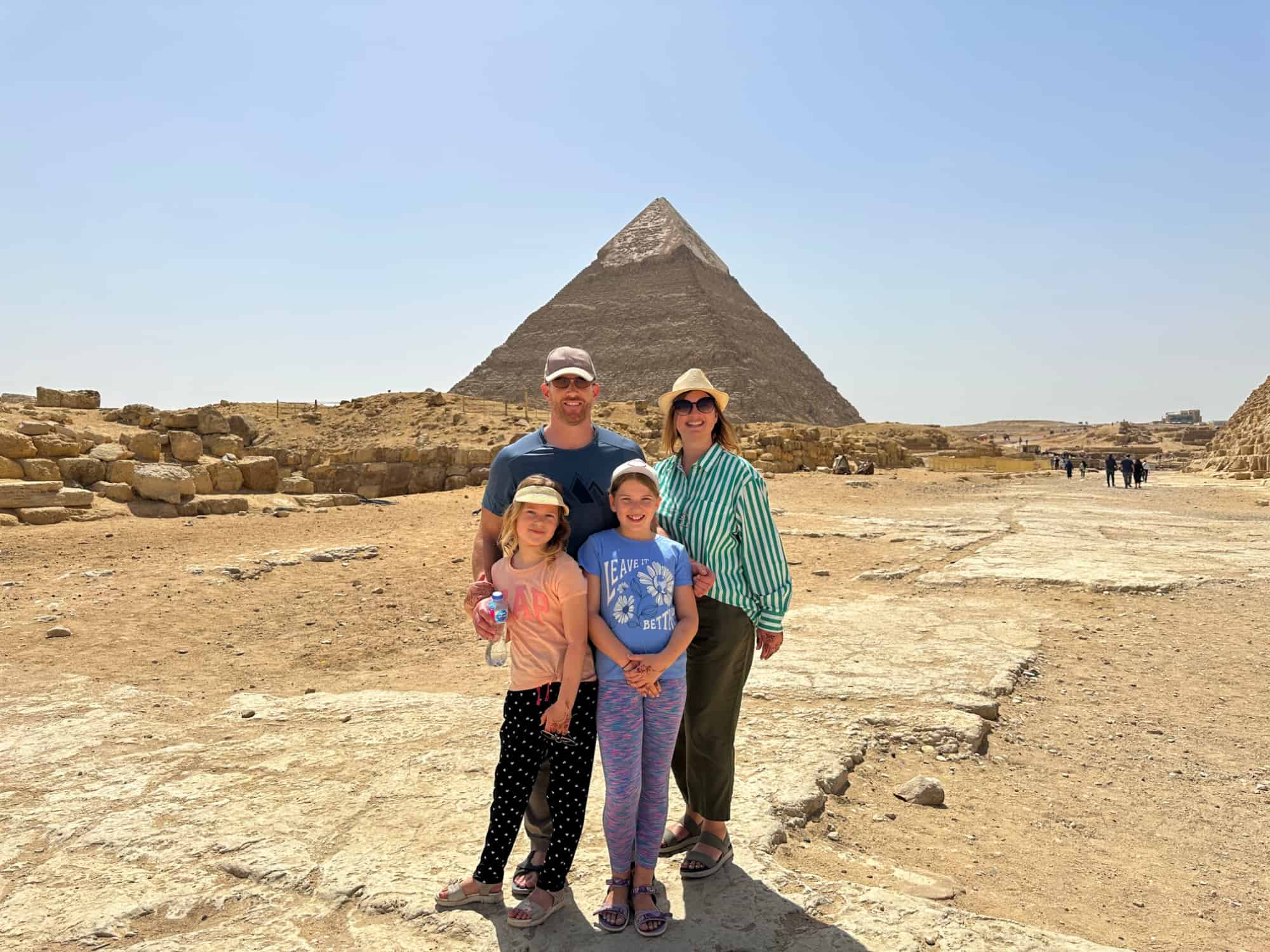
Complete Egypt travel guide for families – our tried and tested tips
If you’re considering visiting Egypt with kids it’s important to go with your eyes open. It is full of magical places. But it is not Disneyland. Here I’m sharing everything we learnt during our ten day tour to provide a comprehensive Egypt travel guide for families planning a similar adventure.
*This post contains affiliate links. If you click and buy something, I may earn some commission. This is at no extra cost to you but helps me cover the costs of running this website. See my privacy policy and disclosure policy for more information.*
Ancient Egypt was an advanced civilisation whose mind-blowing achievements are still being discovered and analysed around the world. This is the Egypt people dream about going to see.
However, modern Egypt faces many challenges. Over population, poverty, climate change and youth unemployment all factor high on its national risk register.
It’s also a Muslim country with different cultural norms to those of the European and US tourists who have made up the bulk of visitors in recent years.
Contents - jump to what you'd like to know
Our experience of visiting Egypt

We visited Egypt on a family-friendly tour booked through a travel agent. This included a full-time professional guide, our accommodation bookings, all our travel by road using a private mini bus, and a journey on the Egypt sleeper train.
Everything was planned for us so we are not experts in self-guided Egypt itineraries, but our experiences are relevant to families who want to try a DIY trip or a package.
Before booking our 10 day Egypt itinerary we did some research online and spoke to other families who’d visited.
We knew that tourists can be harassed at the ancient sites. We knew that women in-particular can be subject to unwanted attention. And we knew that we would be asked for tips for anything and everything.
But we still wanted to visit Egypt.
In the end I think we went over-prepared for all of the potential downsides and came away pleasantly surprised that it wasn’t as bad as we imagined.
I suspect that managing our expectations helped and I’d encourage other families visiting Egypt to do the same to avoid any disappointment.
In this post I’m sharing some of the things we learnt about visiting Egypt. It includes:
- Is Egypt safe to visit?
- Do you need a visa to travel to Egypt?
- Flights to Egypt
- Getting around in country
- The best time to visit Egypt
- Things to know about visiting Egypt during Ramadan
- Currency and tipping in Egypt
- Handling souqs and street hawkers
- What to wear in Egypt
- Journey times between ancient sites
- Family accommodation
- Security in Egypt
- What to expect on Egypt’s roads
- What not to do in Egypt
- What to pack for travelling to Egypt
Things to know before travelling to Egypt
Here’s some information to help you manage your expectations before visiting Egypt. Some of it is very factual, while other parts are based on our personal experience.
Is Egypt safe to visit?
This was the question I was asked most on Facebook and Instagram before, during and after our trip.
It’s a fair ask.
Egypt ranks in the top 40 countries in the world affected by terrorism. And the UK government advises against travelling to some areas within the country.
In general there is a heightened risk of terrorism in Egypt but incidents have fallen in recent years. You can see how this compares with other countries in the Global Terrorism Index.
The conflict in Sudan to the south might also make people think twice about how safe it is to visit Egypt.
North East Africa is a region with significant political unrest. The Foreign Commonwealth Office is constantly updating its travel advice.
Feeling safe in Egypt
Feeling safe is a very subjective thing. Our personal experience was that we felt very safe.
You will travel through countless police check points where armed officers ask drivers who they have in their vehicle. And there are armed guards at all tourist sites.
Each of our hotels had security people at the front gate and bag scanners in the lobby.
We found this all reassuring rather than worrying.
We had our own guide with us the whole time and we didn’t touch on any of the places the UK government advises not to go. We also knew our travel agent would react to the latest travel guidance.
If you do have safety concerns then we can recommend booking your tour through a travel agent so that you have your own guide and every part of your trip is arranged in advance.
We used and had a great experience with Families Worldwide, a UK-based tour company. Stubborn Mule and Intrepid Travel also offer Egypt tours for families.
Just like you should every time you go on holiday, make sure you have a good travel insurance policy that adequately covers the country you are visiting and all of the activities you may do.
The best time to visit Egypt

We visited Egypt at the beginning of April during our children’s Easter school holidays.
The temperature in Cairo, on the Mediterranean coast in Alexandria and on the Red Sea was below 30°C in the middle of the day, so sightseeing was possible, although we had lots of water with us and sought out shade when we could.
When we travelled south to Luxor and Aswan the daytime temperature peaked at 35°C, which was less comfortable. We still managed to spend a few hours exploring the ancient sites but the AC of our private mini bus was a very welcome relief.
Between May and September the tourism season in Egypt winds down due to the heat. Temperatures rise above 40°C, which can make sightseeing difficult, particularly with children.
By October Egypt’s average temperature has slipped back down to 30°C and in December through to February the thermometer lingers at around 20°C making exploring much easier.
So if you want to avoid the worst of the North African heat December and February half term are the best times to visit Egypt for sightseeing.
October and April are the optimum times if you want to combine seeing the ancient wonders with a beach holiday at a Red Sea resort.
As Egypt is a predominantly Muslim country, you should also be aware of the timing of Ramadan and what this means for visitors.
Do you need a visa to travel to Egypt?
Yes. Each person visiting Egypt must have a tourist visa unless you are only staying in the Sharm el Sheikh, Dahab, Nuweiba or Taba resorts and are there for no more than 15 days.
Visas to travel everywhere else in Egypt cost $25 per person and can be bought online on the Egyptian Government’s official visa website. Ours took 24 hours to come through.
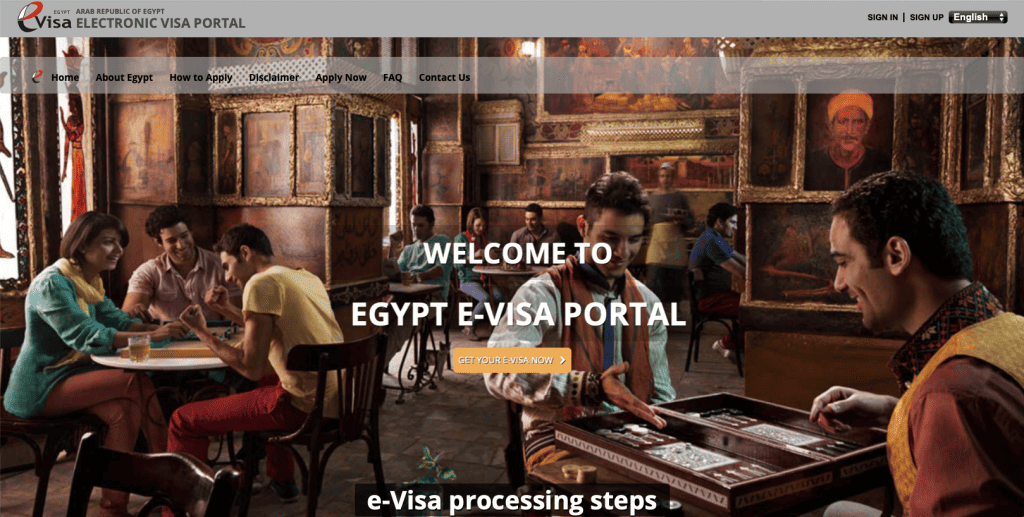
The website is a little clunky, so be patient.
You can also buy visas at the airport before you go through immigration. I prefer to get this kind of detail sorted well before we land.
Flights to Egypt

We booked our own flights to Egypt using Skyscanner to check the best routes and prices. There are plenty of direct flights to Cairo International Airport from the UK.
If you want to skip Cairo and hop on to Luxor, Aswan or the Red Sea you’ll need to get a connection.
Egypt Air is the main airline for internal flights:
- Cairo to Luxor
- Cairo to Aswan
- Cairo to Hurghada (for Red Sea resorts)
We found their website to be a bit ropey and their customer service was really poor when we wanted to make a change to our flights.
The flight itself – an internal trip from Hurghada to Cairo – was much more pleasant than the pre-travel admin.
If you book your travel itinerary through a tour operator they can organise all your flights as part of your package. We had to book our own as we were travelling from outside the UK.
Getting around Egypt

Our transport was included as part of our tour but if you are arranging your own itinerary it’s a good idea to get your tickets or drivers booked in advance.
Backpacking families have got this licked whichever country they are visiting. If you’re wondering how they do it without local contacts, websites like 12Go are the key.
It helps you easily find options to get around – buses, trains, flights or taxis – from A to B for your family group and budget.
Check out the transport options for popular routes around Egypt:
Search for transport between more places in Egypt.
More handy things to know before visiting Egypt
Currency in Egypt

Cash is king in Egypt. And with less than 3p per Egyptian Pound (EGP) you will need a wedge of it.
We picked up our currency at Cairo Airport, and at cash machines inside and outside our hotels. It was easy to get our hands on the larger notes this way but it’s useful to have one, five and 10 EGP notes for tipping, and for the toilets at the historic sites and road side loo breaks.
You’ll have to make a purchase to get hold of these or ask if your hotel reception can swap big notes for small ones.
A lot of places, partiality souq traders, will also accept US dollars and Euros.
Tipping
The average monthly wage in Cairo is $100 (around £80). So elsewhere in Egypt you can expect people to have even less money in their pockets.
Tipping is not just a nice thing to do for good service, it is an essential part of the Egyptian economy.
Everyone from toilet attendants to the guys selling camel rides and the guards at historic sites who offer to take photos expect a tip.
The only place we saw signs saying you definitely should not tip was at the airport.
The good news for your travel budget is that no one expects much. You just need to have lots of small change on you.
We budgeted £50 for tips over our 10 days in Egypt and gave this to our full-time guide to distribute on our behalf.
He tipped our drivers, staff at restaurants and at hotels. He also slipped tips to cleaning staff at the historic sites. We left it to his discretion to distribute the money in the best way.
At the end of our tour we also tipped our guide. Our travel agent suggested between £2 and £5 per person per day. We went for the top end of this after seeing how hard he worked.
Toilets
At the historic sites the standard charge to use the public toilets seemed to be 5 EGP per person. Some places didn’t charge for children while others did.
The most we paid to use road side toilets as 10EGP per person.
If you go to a restaurant or cafe with a toilet attendant you will be expected to tip 1 to 2 EGP for each person, even if you bring your own toilet roll and you’ve bought food.
You’re less likely to find a toilet attendant in smaller restaurants, but if you pop in off the street to use the toilet expect to be charged.
On the way to the Valley of the Kings in Luxor my youngest daughter was desperate for a wee to we stopped at a cafe. The owner tried to charge us 10EGP each. I only had 5EGP on me so he had to settle for that. We’d already been at that point so there wasn’t much he could do.
Souqs and street hawkers
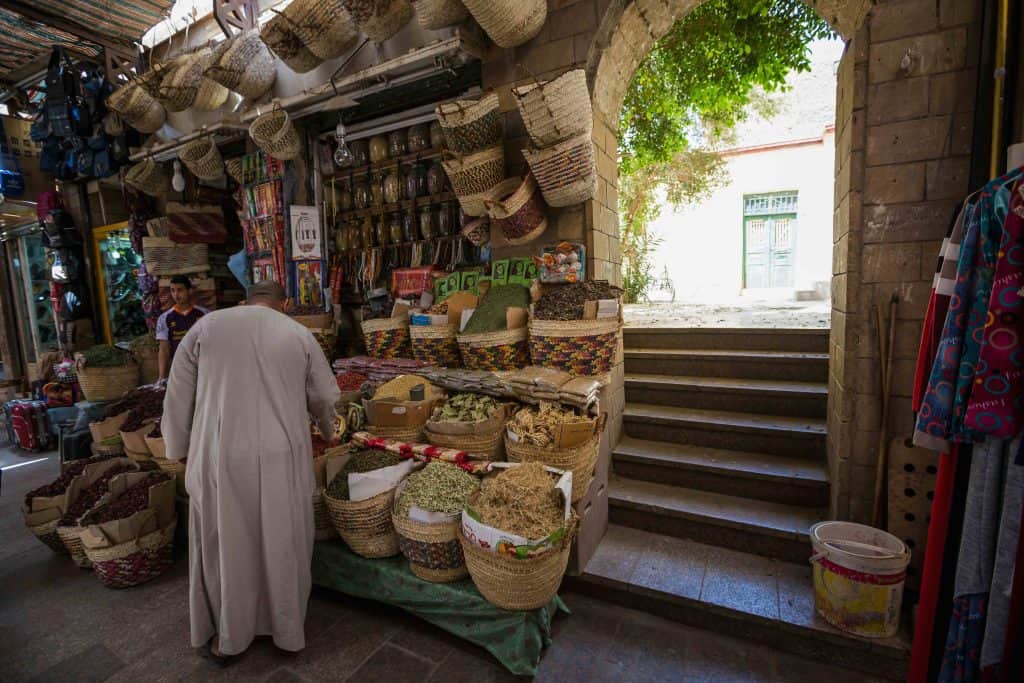
We’re no strangers to souqs as we live in the Middle East. However, we found the sales tactics in Egypt a bit more forward than in Oman where we live.
Street hawkers
You’ll be approached by people selling things and services outside the historic sites and on the streets if you are out at night.
The adults and children trying to get you to take horse and carriage rides or buy cheap souvenirs are persistent. We found ourselves saying ‘la shukran’ (‘no thank you’ in Arabic) a lot.
Having said that they were not rude and took rejection well when they finally gave up, simply walking away.
The only rude and aggressive people we saw in Egypt were other tourists.
A word of warning about souqs
The one negative experience we had was at Luxor souq. By day seven into our trip we had a bit of downtime and decided to do some souvenir shopping.
Our eyes had been caught by the loose harem pants we’d seen on lots of markets at the historic sights, so we wanted to get a few pairs.
We haggled a reasonable price and were then persuaded to buy an expensive trinket that we really didn’t want. At this point we could see things were going to spiral out of our control if we didn’t leave.
So, the souq isn’t somewhere I recommend browsing with kids.
The traders are very keen for you to visit their friends’ shops and once inside it is harder to stop them pressing small gifts into children’s hands.
If you do go, have a mission and stick to it otherwise you could come away with all kinds of things you don’t want or need. We made a quick exit after buying our off mission souvenir, which is a shame as I’d liked to have looked around some more.
As I mentioned earlier, a lot of people have asked me if we felt safe in Egypt and we absolutely did. But did we feel harassed?
This was the only time we felt really hassled in Egypt. It was our one evening out without our guide so I suspect that might have shielded us from over-zealous sales pitches elsewhere.
Stomach upsets
Whenever we visit a country where there’s a chance of picking up a funny tummy I usually do. It may not be a bug or dodgy food as such, but I often find my stomach is unsettled when we are travelling.
I had a rumbling during our Egypt trip but it was mild and only lasted half a day after I popped a precautionary Imodium.
Pack a packet of whatever you usually use to help settle your stomach in case one end or the other reacts to different food and water. Rehydration sachets are also handy to have in your travel first aid kit.
Drinking water

Bottled water is much safer to drink than tap water. Some people go as far as avoiding salads and fruit that has not been peeled, but we ate small quantities of both at our hotels.
We used tap water to brush our teeth in our hotels but avoided it altogether during our train ride from Cairo to Aswan. Even our Egyptian guide used bottled water to clean his teeth.
Journey times between Egypt’s ancient sites
If you want to see a good proportion of Egypt’s ancient wonders in one trip you will be doing a lot of travel.
For this reason I’m glad we did this trip when the girls were aged 10 and nearly eight. It was tiring.
They spent a lot of time in our mini bus napping or on their tablets as the scenery – often very bland – rolled by

I brought a bag full of cereal bars, nuts and sweets with us and we topped this up during the trip.
Our longest travel day – aside from our 16 hour journey home – was a nine hour round trip to Abu Simbel. Seven hours of this was on the road.
There were also some very early mornings and late nights that younger children may find difficult. Our girls were pushed to their limits.
When we first looked at Egypt as a possible destination we knew we needed to add some downtime to the end of our trip for everyone’s sanity. We did seven straight days sightseeing and two full days at the end relaxing.
On reflection, if we’d had more time, I’d have added an extra day off in the middle.
Hotel star ratings in Egypt
Egypt has a lot of five star hotels, but they don’t necessarily match the standards of five star hotels in the UK and Europe.
We stayed in three five star hotels and one four star hotel during our 10 day trip. Two of the five star hotels were quite tired. Fixtures and fittings were worn, particularly in the bathrooms.
One of them didn’t provide a kettle in our rooms and had a something weird going on in the bathroom.
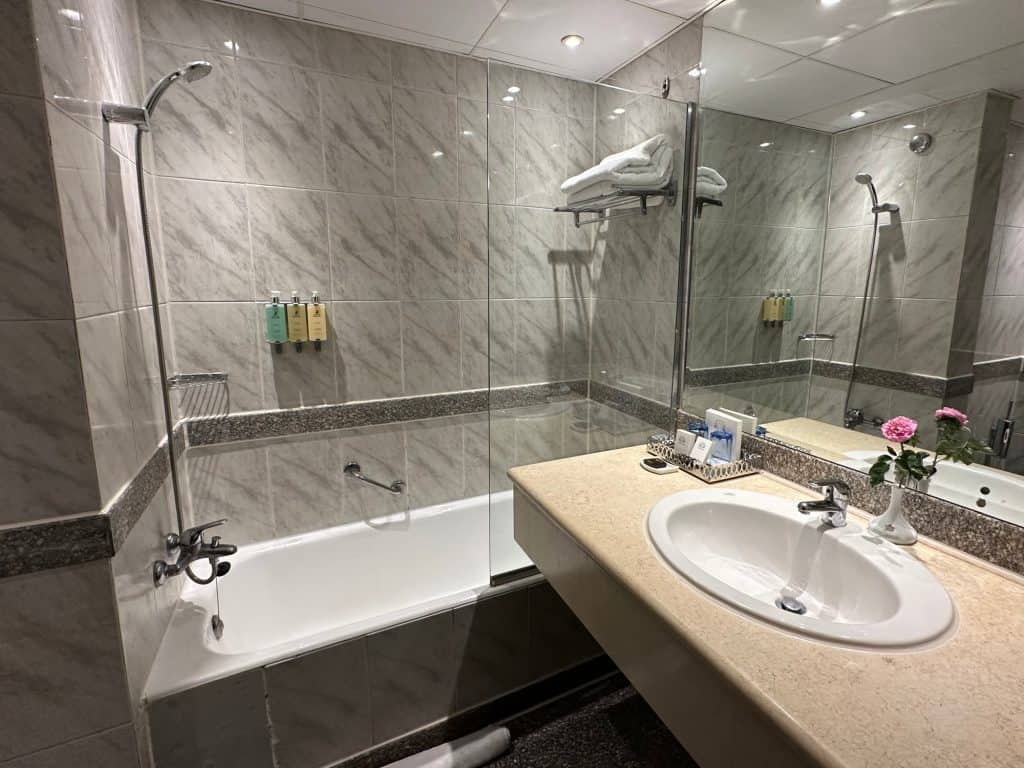
The rooms in our four star hotel in Hurghada, which was aimed at a European market, were much better. But they didn’t have much character.

I’ve summarised the rooms, facilities and service at the places we stayed in my Egypt itinerary post.
Something else to bear in mind is that Egypt’s city hotels rarely do family rooms. You might find family suites at some of the Red Sea resorts.
We had interconnecting rooms at three out of the four hotels we stayed at and onboard the sleeper train between Cairo and Aswan.
This isn’t a problem for us – we quite liked having more space while still being able to keep an eye on the kids – but families with younger children might want to stay in a single room.
Security
There’s no getting away from the fact security is tight in Egypt.
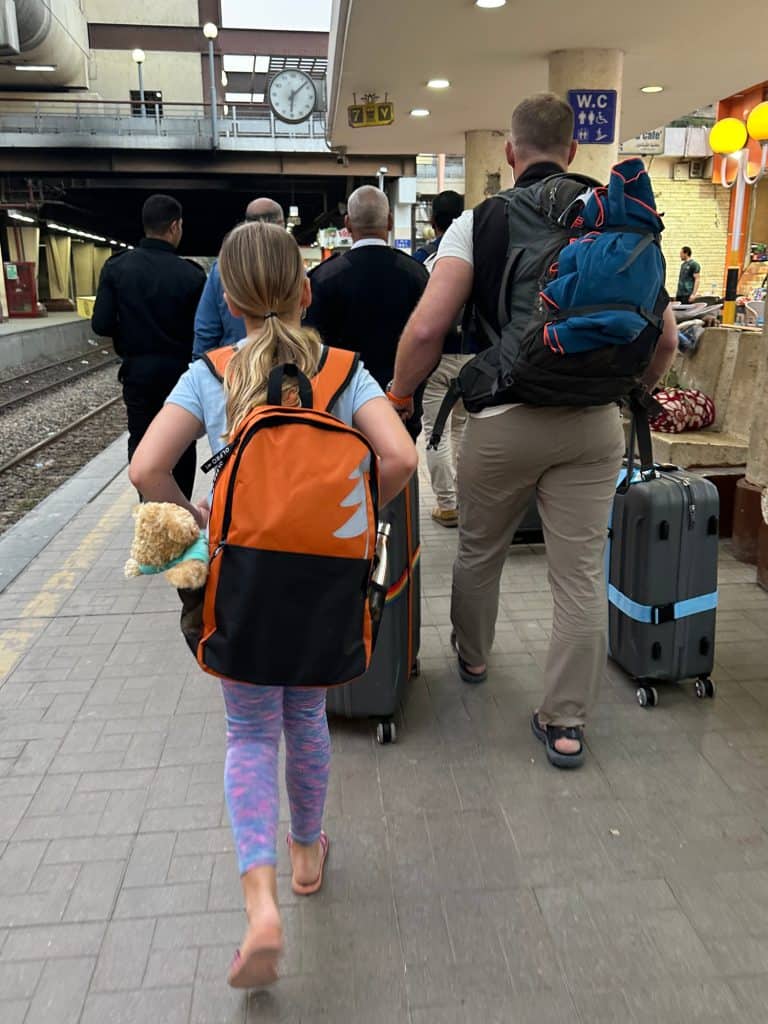
You will travel through countless police check points where armed officers ask drivers who they have in their vehicle. ‘Four anglaise’ was always our drivers’ reply and away we went. Only one police officer asked for the mini bus door to be slid open so he could eyeball us.
There are armed guards at all tourist sites and each of our hotels had security people at the front gate and bag scanners in the lobby.
We found this all reassuring rather than worrying. It’s what you’d expect in a country where tourists have been targeted by terrorists.
Traffic and roads
The roads in Cairo are a tangle of horn happy drivers, weaving motorcycles, tuk tuks, vans overloaded with people or goods, horses and carts, and pedestrians dashing across eight lane highways. It’s quite a show!
The traffic is similar in Alexandria but much slower paced in Luxor and particularly Aswan.
The quality of rural roads in Southern Egypt is particularly bad.
After the Arab Spring in 2011 many villagers installed speed bumps and check points so they could control who came to their area. The bumps are still in place and make the rural roads uncomfortable to travel.
You’ll also see donkey drawn carts, tuk tuks and even vans loaded with camels outside the cities.
Our Egypt travel tips – dos and don’ts
Here’s some things to do and not to do to make the most of your family holiday in Egypt:
What not to do when visiting Egypt
Before you dive into the places we recommend seeing in Egypt I’m going to suggest some things not to do.
Don’t pick up a guide on the fly
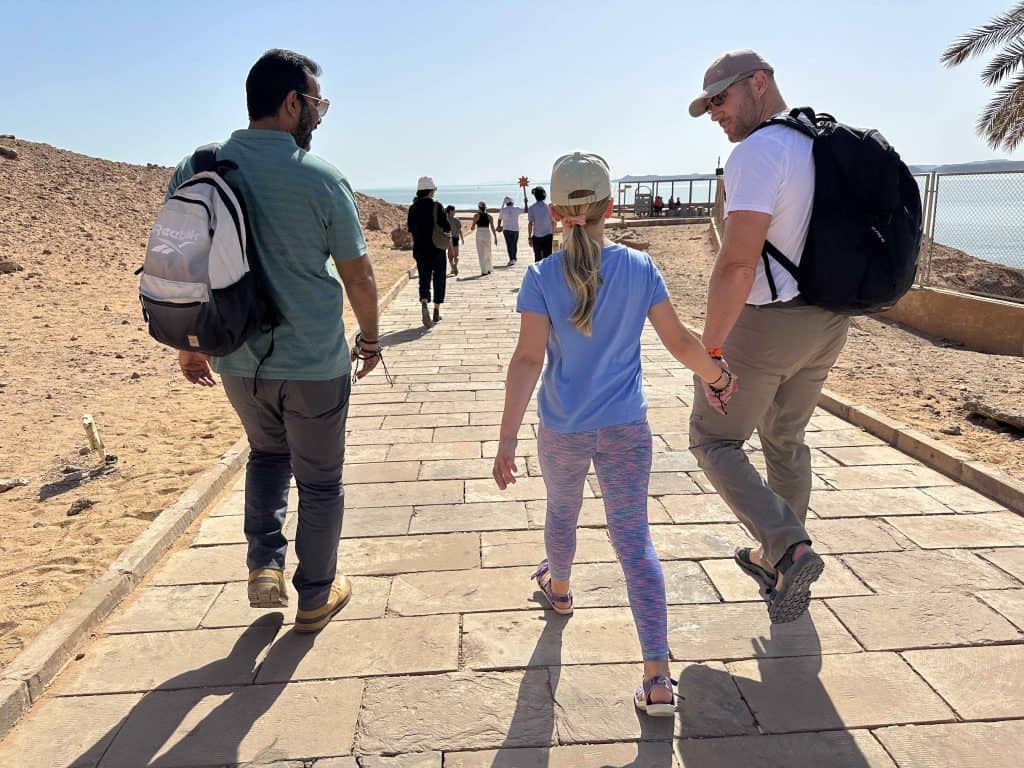
Getting everything agreed in advance means you can make sure you are happy with your guide’s credentials and the price you are going to be charged. We found this much less stressful. I’ve read plenty of stories online by people who felt they got conned by guides they’d employed last minute.
We arranged our guide through our travel agent. He studied Egyptology at the University of Cairo and was with us for the whole 10 days we were in Egypt. We weren’t taken on any unexpected ‘factory tours’, taken to places we didn’t feel safe or asked for extra money at the end.
And because we booked through a travel agent specialising in family holidays our guide was great with our kids. He entertained them interesting stories, found us shady spots where he could tell us about the temples and read the room when the kids had had enough.
Don’t bother bringing a proper camera

All of the ancient sites we visited charged extra if you wanted to use a proper camera.
If a guard sees you using a camera they will ask to see your ticket for it (or for a tip to allow you to use it under the radar).
For this reason, I decided to leave my DSLR at home. It wasn’t worth the faff.
All the photos and videos from our holiday in Egypt were taken on our iPhones.
Smartphone cameras can be used everywhere for free. The only tourist place photos couldn’t be taken was inside the Tutankhamun exhibition in the Egyptian Museum in Cairo.
Don’t bring a drone
It’s illegal to fly a drone in Egypt, so if you have one leave it at home.
Don’t take photos at check points
Taking photos of check points, security guards, police or official government buildings is a no-no. We were even instructed not to take pictures at Aswan Higher Dam for security reasons.
Avoid the sleeper train

This is a tip specifically for clean freaks. If you can’t bear the thought of travelling on a less than spotless and comfortable mode of transport then the sleeper train is not for you.
Personally, I’m glad we did it but I wouldn’t travel by train in Egypt again. I’d fly or book a cruise (without the kids).
Read about our experience on the Cairo to Aswan sleeper train to decide for yourself.
Don’t touch cats and dogs
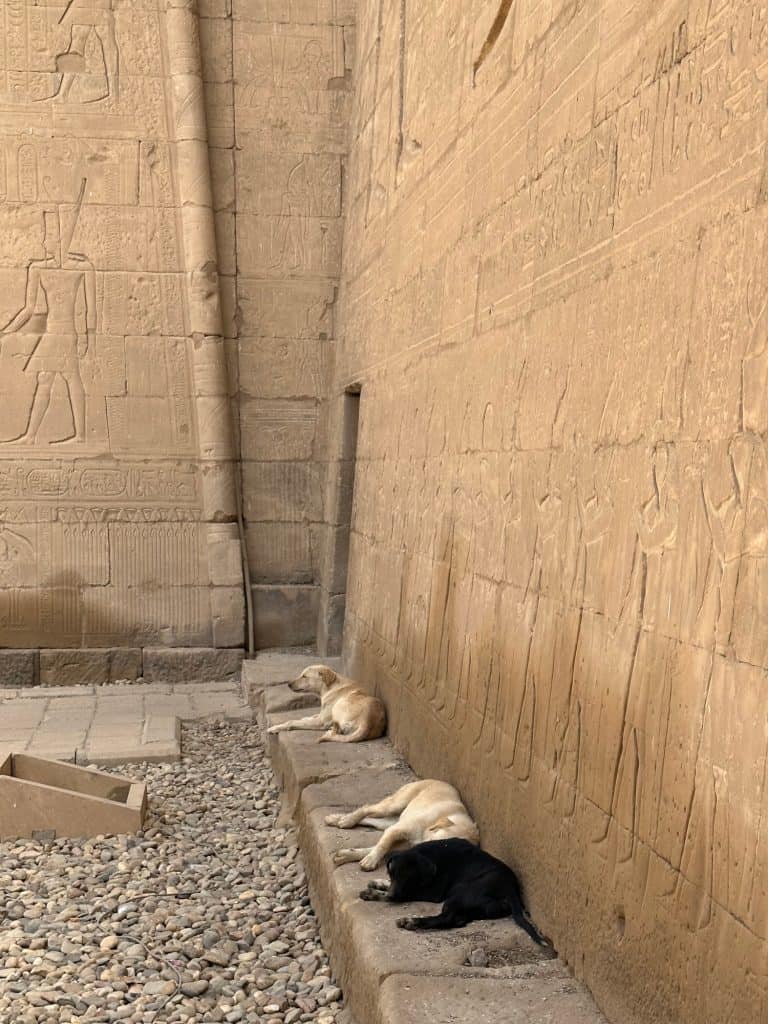
There were lots of cats and dogs at the ancient temple sites we visited in Egypt. We found this a bit surprising as where we live in Oman they would have been chased away or worse.
In Egypt stray animals are part of the street furniture. Locals feed them and leave them to their own devices. We even saw puppies playing outside the Sphinx complex.
Your kids may be tempted to pet animals but they are still wild and won’t have been vaccinated or treated for parasites. So remind animal-loving little people not to touch them, however tame they might appear.
Don’t climb on ancient structures
It’s obvious really, but you are going to get in trouble with the security guards if you start climbing all over the centuries old structures.
Don’t accept offers to see inside roped off rooms
Staff at some ancient sites will invite you into roped off areas and over barriers for a tip.
Our guide warned us about this at Hatshepshut’s temple. Sure enough, when we reached the top tier we were asked if we’d like to go around a barrier. We also saw it happening in the tombs at the Valley of the Kings.
It’s against the law for staff to let you into restricted areas, so don’t feed this illegal activity.
Don’t accept help unless you are happy to tip
If a temple guide offers to take your photo, if someone asks to carry your bag or if someone says they can show you the best view, expect to be asked for a tip.
Don’t forget you are in a Muslim country
Just remember a few simple rules in order to act respectfully and avoid the wrong kind of attention:
- Wear conservative clothing – see above.
- Don’t kiss, cuddle or hold hands with your partner in public. LGBTQ+ couples must keep their relationship secret because Egypt is not a very tolerant country.
- Don’t drink alcohol in public places. Hotels and some restaurants will serve it.
- Avoid discussing religion and politics – Egyptians are very protective of their views. NB we got away with this a bit with our guide as he was well travelled and we got to know him over a period of days.
What to pack for visiting Egypt
By now I hope I’ve answered a lot of your questions about visiting Egypt and you’re ready to pack your bags. But what should you take?
Here’s my packing list including what you’re going to need while you’re travelling and sightseeing:
Travel documents
Here’s the important paperwork to bring with you:
- Passports – they need to be at least six months in date from the day you arrive. Check the gov.uk website for the latest entry requirements and travel advice.
- Your travel insurance – I always have a digital and printed copy with me.
- Your visas – when you apply online you are instructed to have printed copies with you.
- Currency – we couldn’t get hold of any Egyptian Pounds before we travelled so brought some spare US dollars with us. We picked up more cash at the airport and other cash machines.
Hand luggage
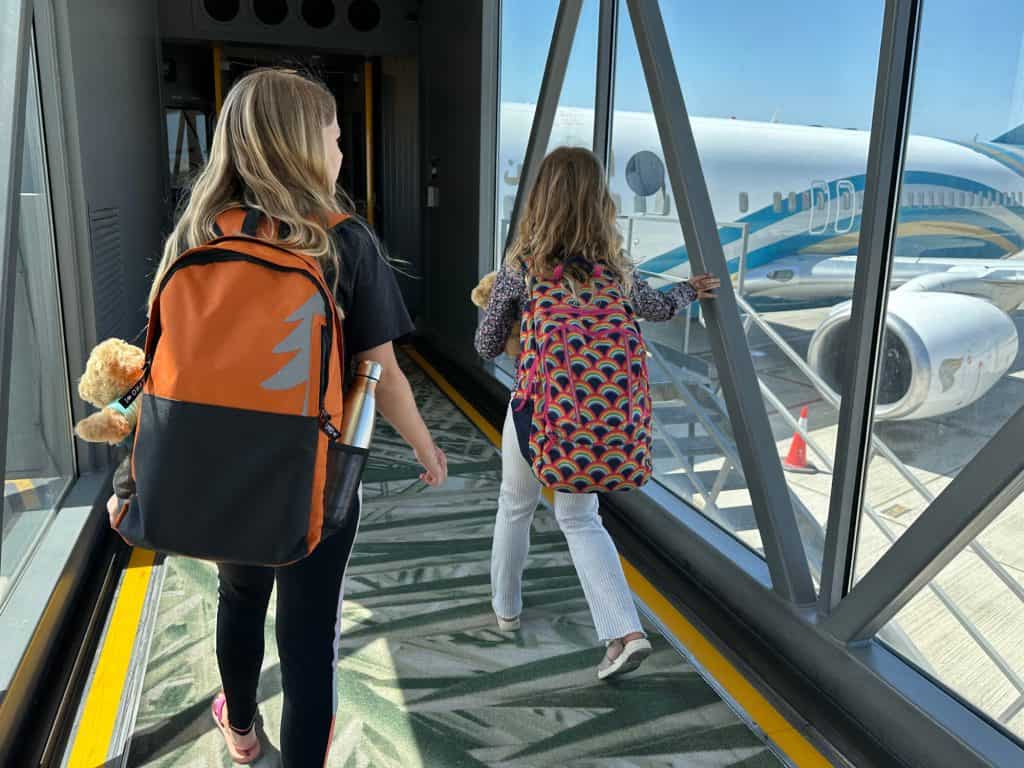
As well as taking three flights we were on the road a lot during our 10 days in Egypt. So we each had a carry on sized bag full of entertainment and things we wanted close to hand.
We took a variety of bags. Mr Tin Box has been using his versatile travel bag the Osprey Farpoint for years, the 10-year-old and I took OLPRO rucksacks*, and the seven-year-old, who loves to be different, had her rainbow pattern Landsend rucksack.
Here’s what we packed in our rucksacks:
- Reading books
- Note book
- Pencil case
- Tablet and earphones
- Snacks
- Squishaboo/travel pillow
- Tissues
- Hand sanitiser
- Reusable water bottle
- Cuddly toys
- Hat
- Sun glasses
- Travel documents
Check out my recommended clothes packing list for Egypt including lots of tips on what to wear.
We visited Egypt in April 2023 and these tips are based on our personal experience then.
Have you visited Egypt? What was your experience? Or are you on your way? Let me know if there’s anything you’d like to know.