

Buscot Park and Gardens – a self-proclaimed hidden gem of Oxfordshire
Hidden? Maybe. A gem? For sure! Buscot Park is not so much hidden as it is allusive. It’s 20 minutes from where we live in West Oxfordshire, so an obvious choice for a walk. But visiting isn’t easy as it’s only open from 2pm to 6pm for six months of the year.
But, take it from me, it’s worth it. We got a lot more than we expected from visiting this National Trust property. Its gardens are impressively landscaped and the mansion feels like a home despite housing masterpieces that would fit right in at the National Gallery.
If exploring Buscot Park is on your list of things to do while mooching around the Oxfordshire/Wiltshire border, read on.
Contents - jump to what you'd like to know
What is the history of Buscot House?

The National Trust has owned Buscot Park since 1956, but it is managed, and still lived in, by the descendants of the 1st Lord Faringdon who bought the estate the late 19th Century.
Since being completed in 1783, Buscot has had a string of intriguing residents. From thrice married Edward Lovedon, who played an important role in improving the canal network from Staines to Gloucester, to a clutch of children evacuated from Basque during the Spanish Civil War.
Gavin Henderson, the 2nd Lord Faringdon, was one of its most charismatic owners. He was a pacifist, a hero of the Blitz, prominent socialist, horticulturist and art lover. He was also responsible for restoring the house inline with its 18th Century roots and growing the art collection.
The Henderson family still manage Buscot on behalf of the National Trust and enjoy it as a private residence for half the year.
There’s an excellent run down of Buscot’s history and mini-bios of the people who have lived here on the Buscot Park website.
Things to do at Buscot Park
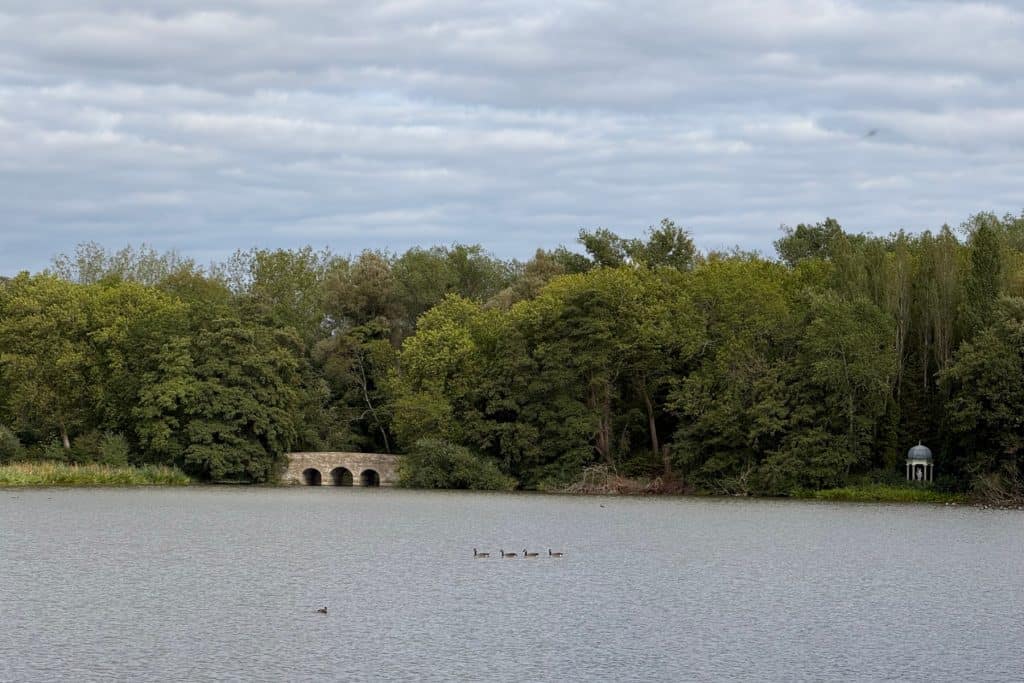
The lack of information on the National Trust website mislead us into thinking there wasn’t much to see at Buscot.
It turns out we could have easily filled the whole afternoon.
Garden discoveries
Every visit to Buscot begins with a walk through the vegetable patches, flower beds and water features of the Walled Garden. But this rather cliched introduction to this historic property does not prepare you for the rest of the garden experience.

Beyond the walls we took the steep steps up towards the mansion and were surprised to find a collection of Terracotta Warriors standing to attention between the box hedges. These replica statues are a hint at what’s to come in the rest of the gardens.
To the east of the mansion, the garden fans out into six avenues, each with their own surprises.
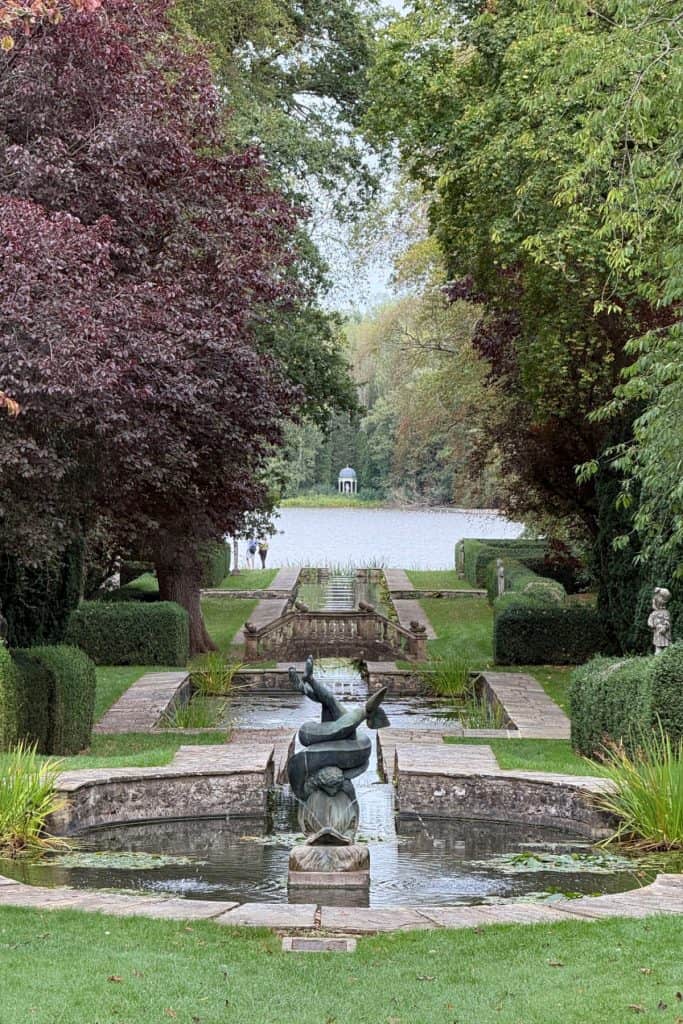
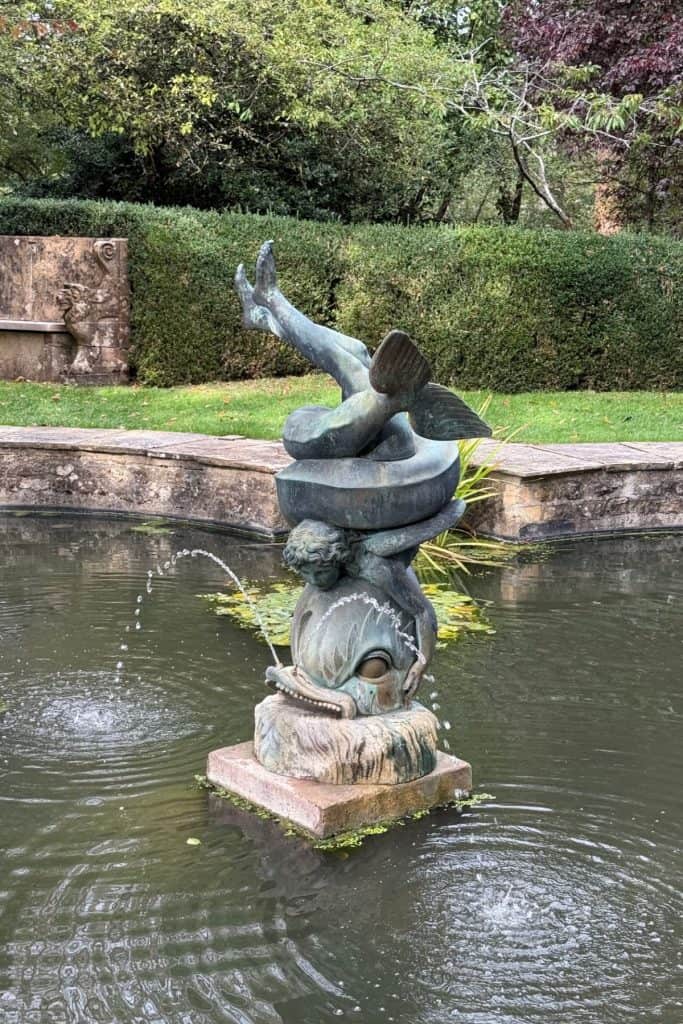
There’s an Italian water garden that leads to a lake teeming with fresh water muscles and enormous fish.


We also had time to admire the Jubilee Sundial and Obelisk, sit for a while in the Citrus Bowl garden with its gleaming pyramid, and wander through the Swinging Garden with its rocking seats and rotating sycamore sculpture.
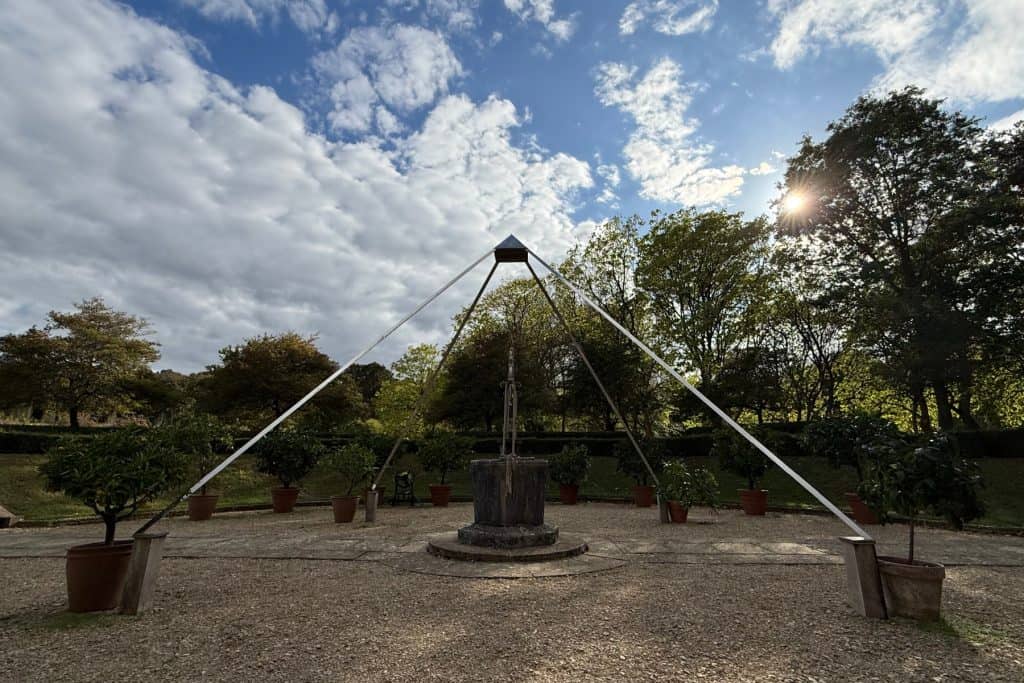

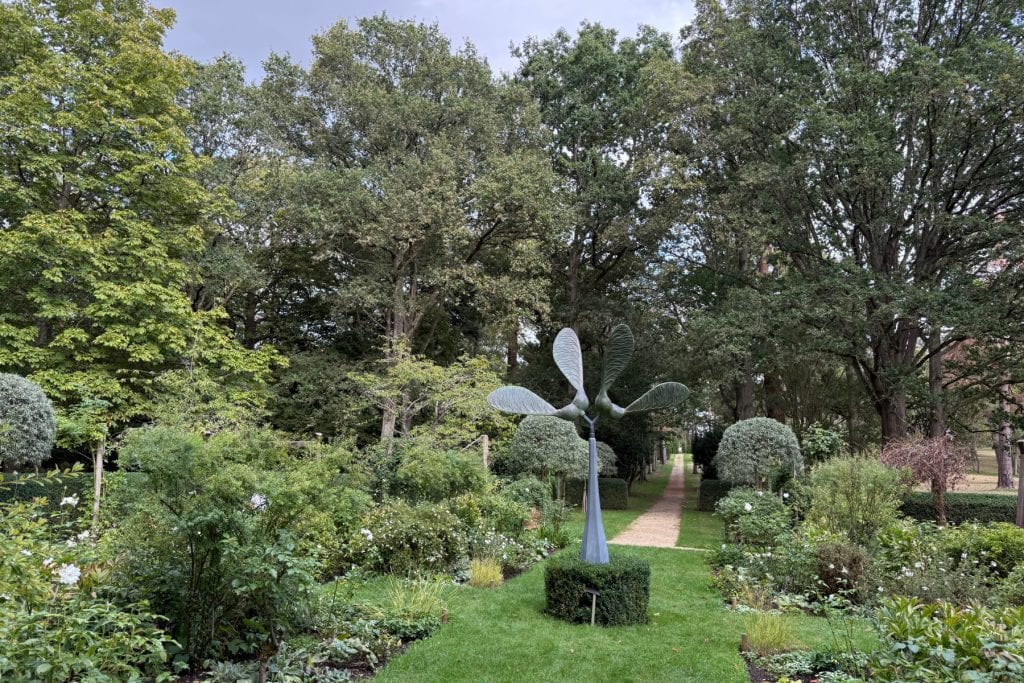
Each new discovery spurs you on to the next outdoor exhibit.
Touring Buscot Mansion
We had no expectations as we stepped inside Buscot House. But our interest was immediately piqued by an Omani Khanjar (a ceremonial knife on a belt) that we saw displayed in The Dutch Room.
If you’ve read anything of our 2.5 years living in Oman you’ll understand our excitement. We couldn’t find out exactly how the knife belt had found its way here, but there are printed guides in each room with lots of information about what you can see.
And it’s not just objet d’art displayed in this 18th Century house. It is packed with carefully curated treasures, from the Rossetti, Gainsborough and Burne-Jones artwork hanging on the walls to furniture made by Neoclassical designer Robert Adam.
Buscot’s artworks are maintained as part of The Faringdon Collection, which is managed by the Hendersons and other trustees. They are still adding to the collection. Upstairs you can see contemporary artworks which bring a very different feel to the house.
I would love to share some photos, but only the likes of Hello! Magazine are permitted to share interior shots. Have a nosy through their photos from February 2026.

Overall the mansion it feels very homely compared to a lot of National Trust places. You can see a smattering of family photos in between the art and the swimming pool is obviously still very much in use.
If you’re visiting with children it’s worth mentioning that there’s no trail sheet or hands on activities that you might find at other National Trust places. The attraction for them will be in the vibrant colours of the furnishings, spotting different styles of artwork and finding curiosities in the gardens.
Where next
I can recommend combining Buscot with a walk at Coleshill, which is a short drive away. Blakes Kitchen is a super popular stop for brunch, lunch or delicious bakes.
FAQs about visiting Buscot Park in Oxfordshire
Allow at least a few hours to look around. Check the Buscot Estate website before you visit as the house opening times vary throughout the week.
If you bring your dog they are only allowed in the paddock by the car park. They can not come with you into the Walled Garden or wider park.
National Trust members can visit for free. Just show your card at reception. Non-members should check the Buscot Park website for the latest entrance charges. These vary depending on whether you are visiting on a day the mansion is open or not.
In general, Buscot is open to the public from 2pm to 6pm from the start of April to the end of September each year. However, the mansion is closed most Mondays and Tuesdays, and both the mansion and grounds are closed on two weekends each month. Check the Buscot website before you visit.
Find more days out in England, Wales, Scotland and Northern Ireland in my big round up of 101 UK attractions for families.